



What's Happening
Conclusion of Orrong Connect’s planning and development phase
Orrong Connect’s planning and development phase has now concluded. The planning study has provided valuable insights into how Orrong Road could be improved in the future to make it safer, more efficient, and better connected for everyone who drives, buses, rides, or walks, and will help inform the development of a future business case.
Main Roads sincerely thanks the community — especially the members of the deliberative panel — for their time, ideas, and commitment throughout the study. The public consultation phase was a great success, engaging thousands of Main Roads customers and capturing a wide range of perspectives that helped shape the planning work.
Although the planning and development phase has concluded, the feedback and findings captured will continue to inform future planning for Orrong Road.
Deliberative panel sessions have concluded
The final session of the deliberative panel for Orrong Road was held on March 29, with panellists delivering their final report to Main Roads.
This, and the previous three all-day sessions were independently facilitated, with the community panel members exploring and evaluating possible solutions for the Orrong Road corridor.
Project Director David Goodram thanked the panel for its time, diligence and hard work in providing a recommendation for the betterment of the community.
Take a look at the behind-the-scenes work of the deliberative panel
Project overview
Orrong Road is a vital connection for many people moving across Perth.
Its role is both local, connecting communities and businesses in the surrounding suburbs, and regional, linking people to Perth Airport, the south-eastern suburbs and Perth Hills. It also links to Welshpool and Kewdale freight/industrial areas.
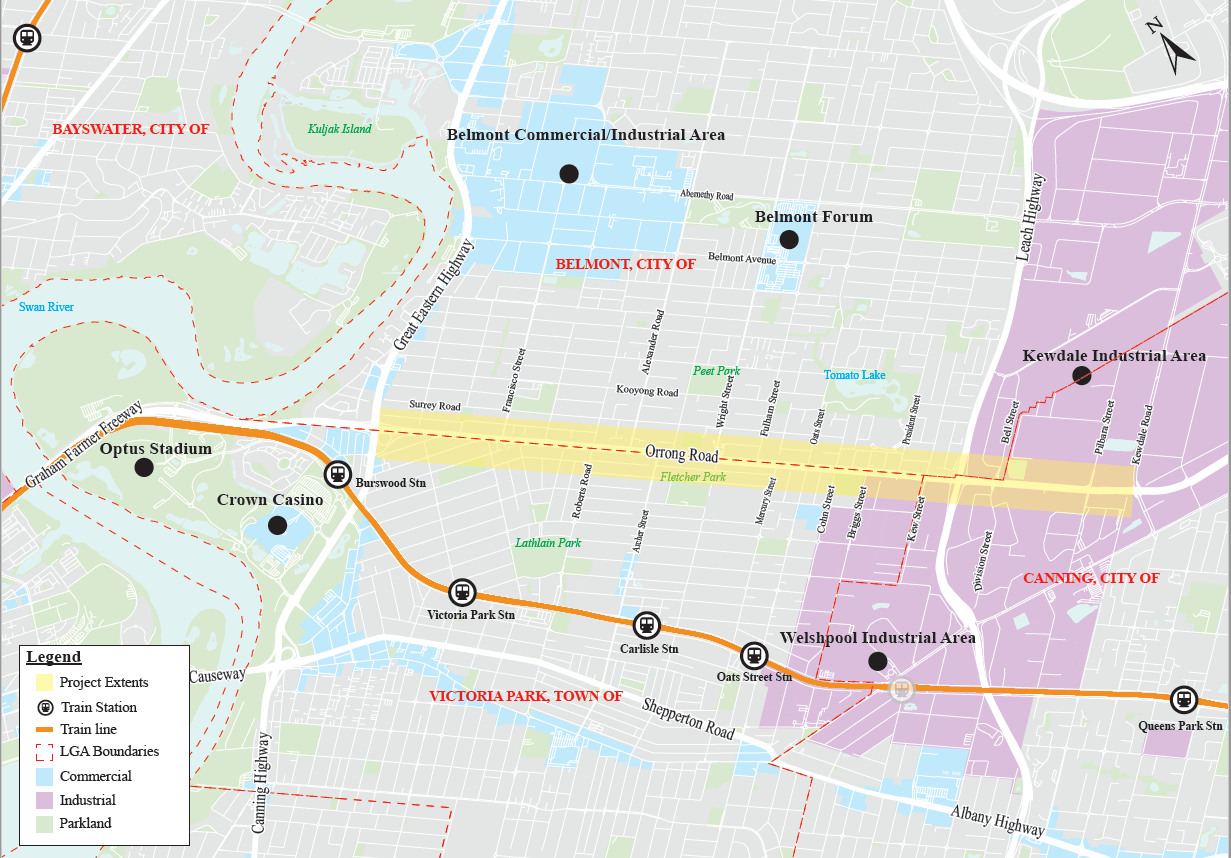
Every day, around 65,000 vehicles (or 85,000 people) travel along Orrong Road between Great Eastern Highway and Leach Highway. In future, congestion will worsen as population and traffic volumes continue to grow.
Main Roads engaged with the community and stakeholders to better informing planning to improve safety, reduce congestion and enhance connectivity and liveability for people who travel along or live near this key transport route.
To create a community-focussed vision for the future of Orrong Road a mix of engagement approaches were used including:
- broad consultation;
- targeted, direct engagement with key stakeholders;
- recruiting a deliberative panel to consider various options and deliver a recommendation that meets the needs of all road users and the local community.
A deliberative panel is a group comprised mostly of randomly recruited community members, with some appointed through an expression of interest process. The group is selected to reflect the demographics of the area and those directly impacted by a decision-making process.
Deliberative panels typically use a super majority model whereby 80% of the group must agree on the recommendation(s) put forward.
The Orrong Connect panel was given a remit to provide advice and rationale for the sustainable future development of the Orrong Road transport corridor.
The project is currently in the planning phase. The full project lifecycle, and a project map, are outlined in the graphics below 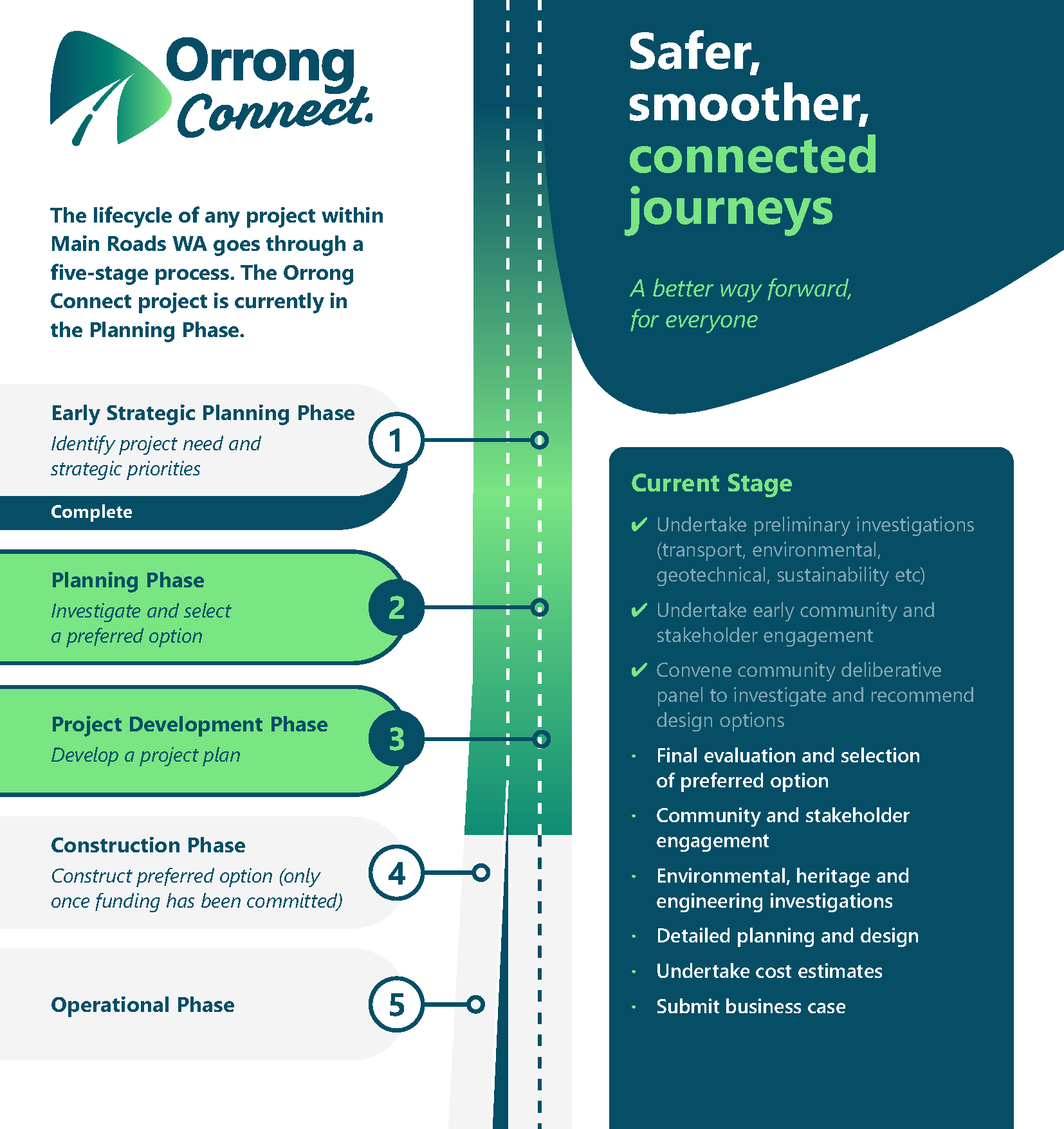

Participate
We are keen to hear from a diverse range of people to help us plan the future of Orrong Road.
Take part »
Resources
On this page you will find project resources and information as well as the latest news and information to help you understand more about the Orrong Connect project.
Visit our resources »