Djiridji Bidi (Zamia Path)
Learn about the artist Harley Richards and the story behind the 300 metre long artwork on Mitchell Freeway between Hepburn Avenue and Warwick Road.
Meet the artist - Harley Richards
Harley Penny Richards is a Noongar man living and working on Whadjuk Country.
His art practice is inspired by visual and self-expression and storytelling through symbolic motifs.
With a keen interest in how the world is perceived through the eyes of others, Harley has a strong fascination in the unknown cultural world, language and self-identity.
He started his art life drawing on walls and is now creating murals both large and small as well as curating Tape-Mind, a multidisciplinary design service and collaborative magazine that is sold across Australia.
“My art practice has always been inspired by visual and self-expression and storytelling through symbolic motifs, strong colour theory and abstraction with a keen interest in how the world is perceived through the eyes of others. I have a strong interest in my cultural world, language and identity as an Aboriginal artist. This is demonstrated through my paintings and digital artworks.”
Djibidji Bidi (Zamia Path) - About the artwork
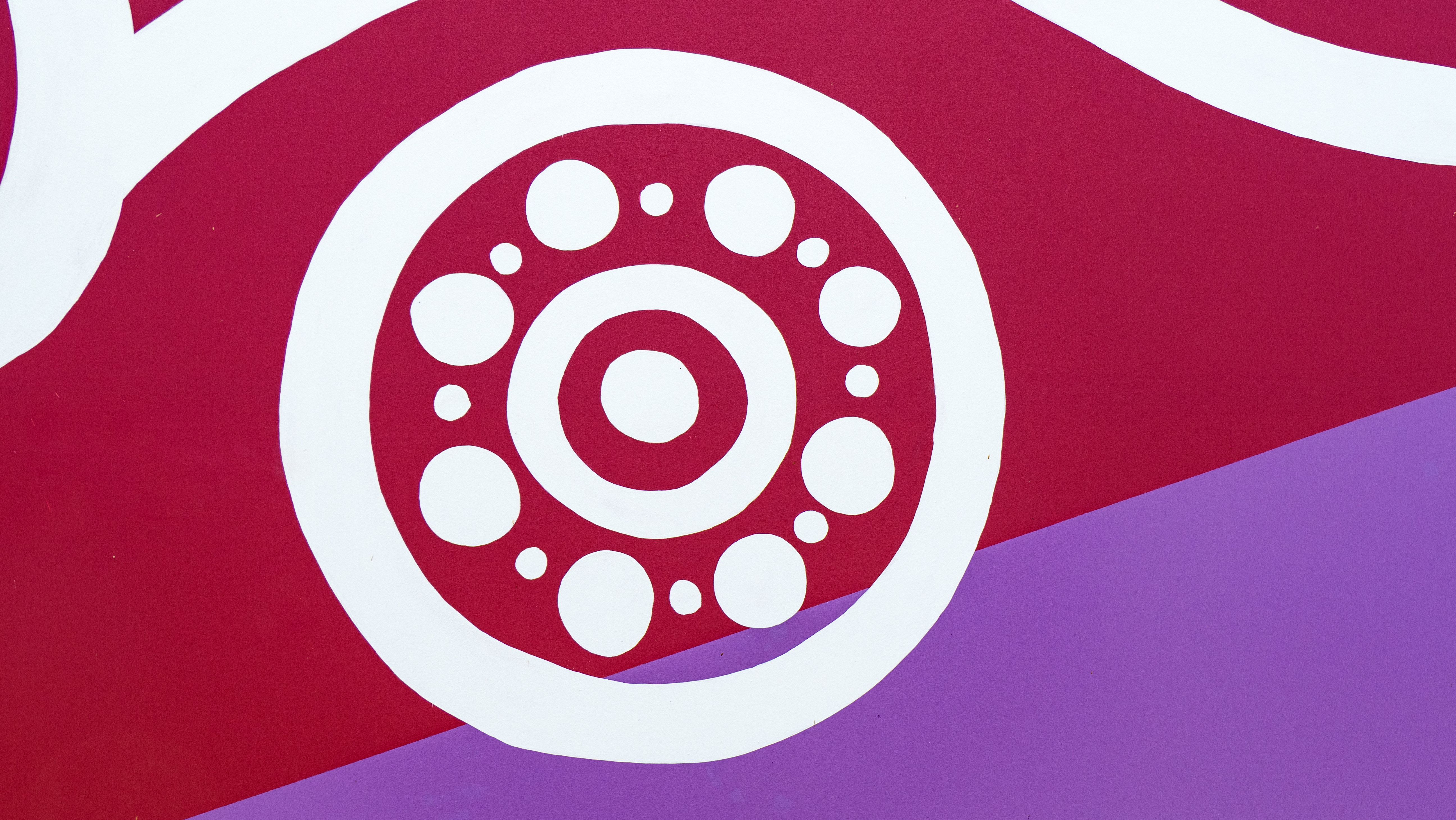
Inspired by the themes of “Waterways” and “Pathways” Harley’s mural is 300 metres long and weaves together symbolic elements like waterholes, resting places and Songlines.
Harley has created a visual journey incorporating his personal interpretations of his family line and heritage alongside abstract line work that mirrors the lakes and geological formations of Warwick and its surroundings.
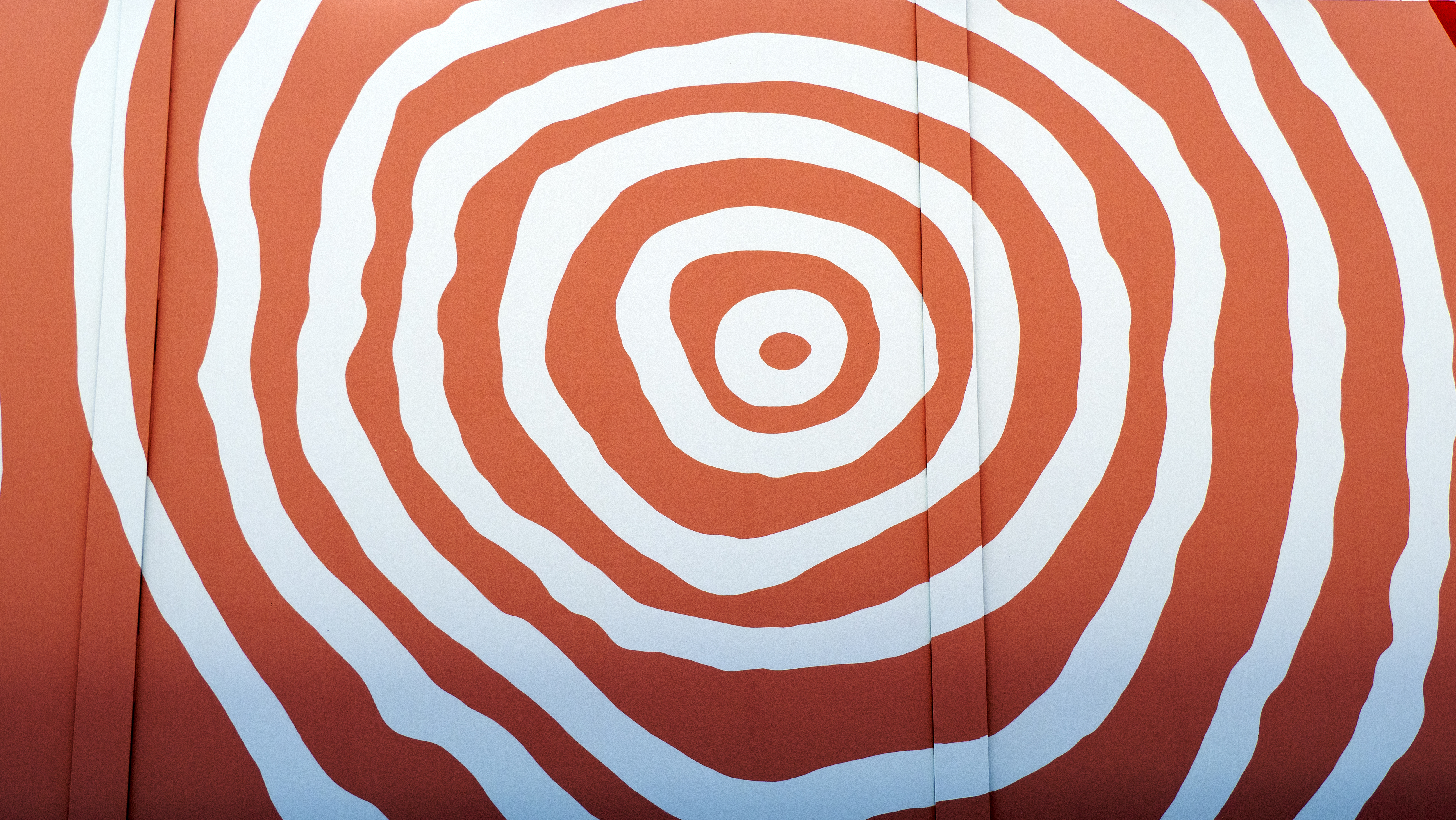
Bold patterns inspired by Noongar shield designs and meeting places stretch across
large sections of the mural and each segment tells its own story, blending visual elements from various places to engage and captivate people passing.
The artwork is a celebration of local cultural heritage, emphasizing songlines such as the waugal and her eggs, and significant cultural sites. It features the diverse wildlife of Lake Goollelal and the nearby wetlands such as fish, snakes and emus.
About the Journey
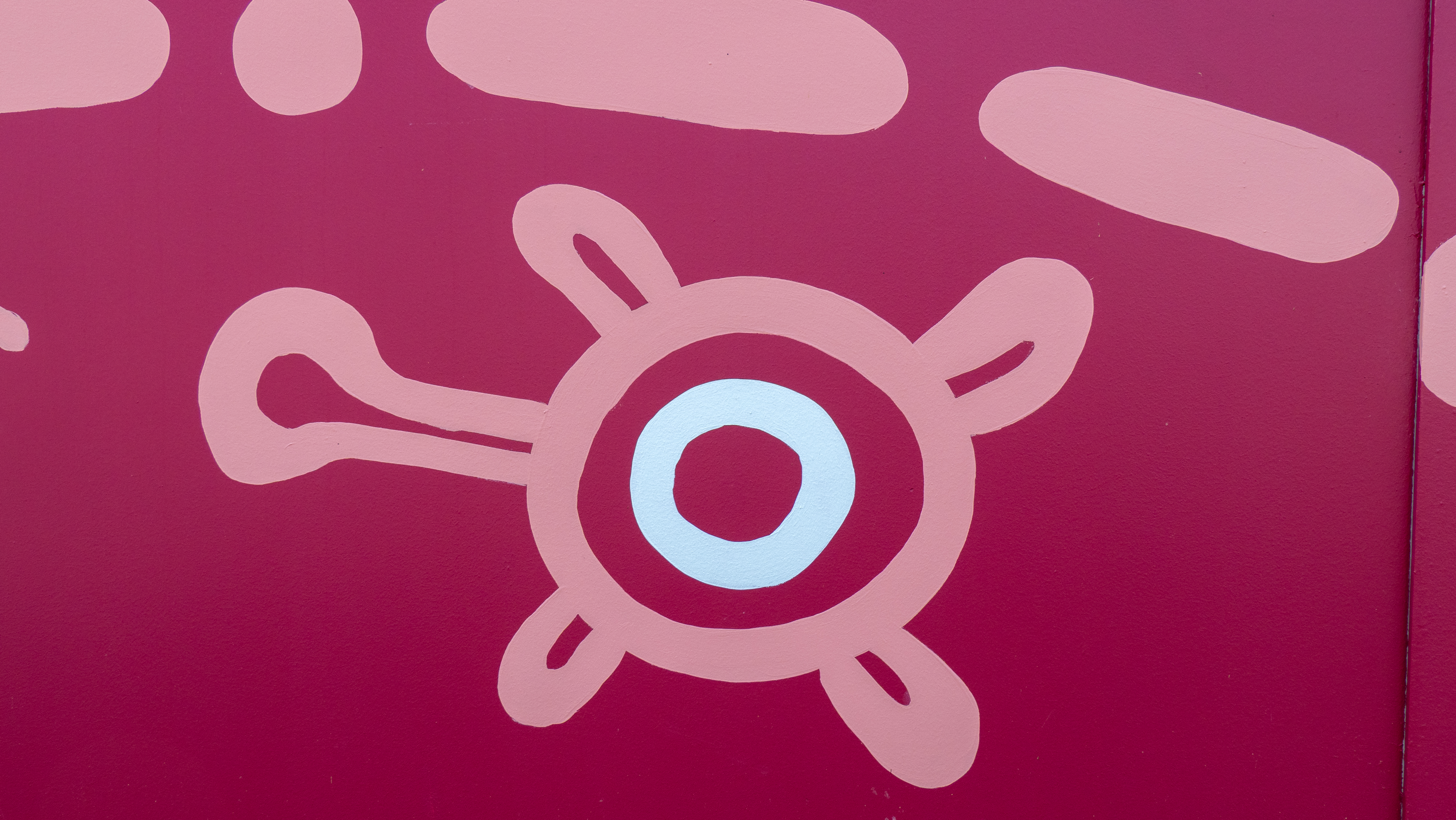
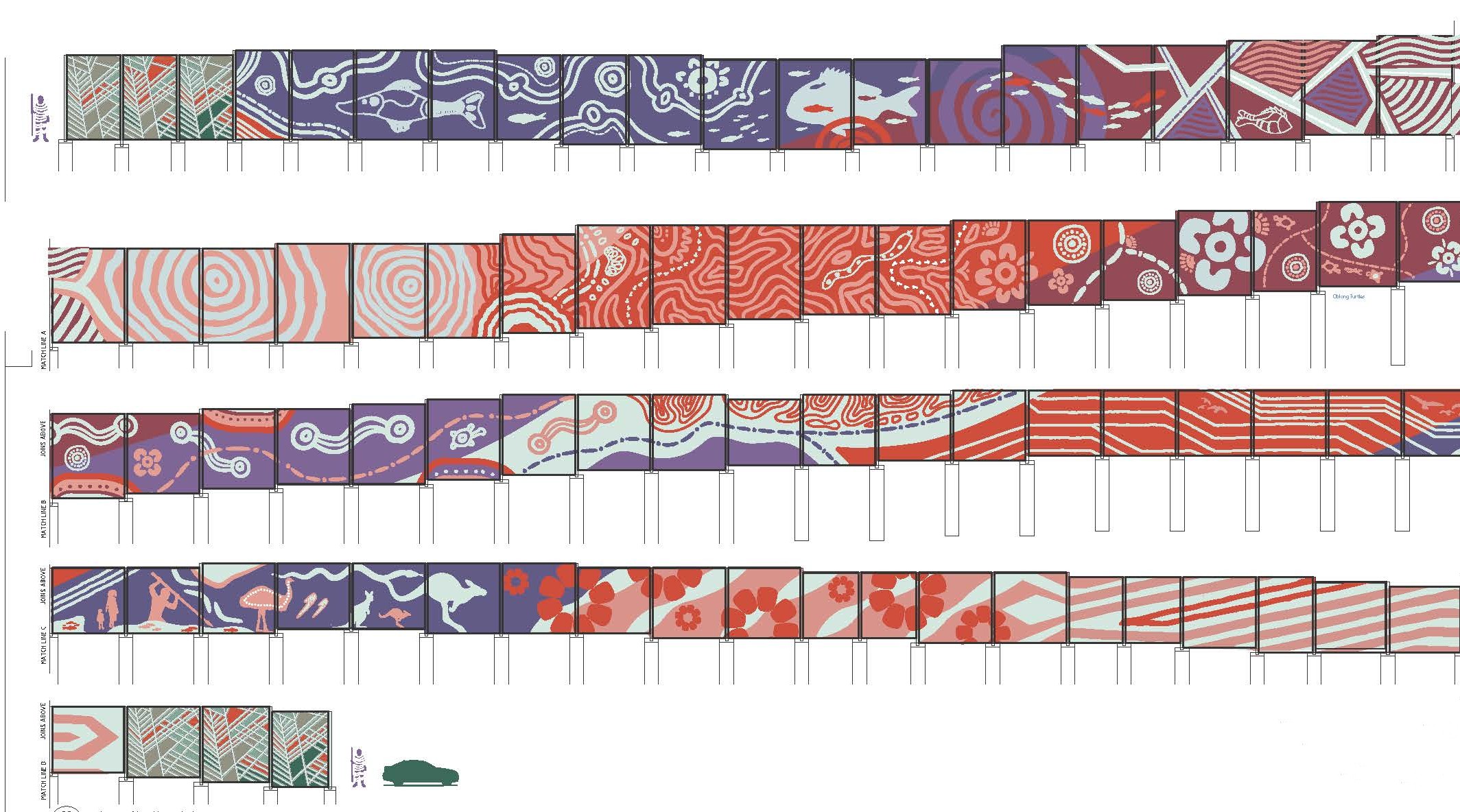
The northern end of the mural uses strong themes of water ways and water life with flowing lines, fish, meeting grounds, lakes and stories being intertwined. Pink geometric line elements symbolise the lakes and streams which the fish live and travel.
Moving south and the large waterhole symbols unify the water elements in Harley’s large, playful linework style.
The Waugal and her eggs story is represented in the middle section which features animal tracks and land topography and flows through pathways into abstract shield lines.
The southern end of the mural reflects the vital role of hunting and gathering and is integral to the storyline of pathways and boodjar, as it connects into the Zamia nut story.
Women and children walk separately from men, who were responsible for hunting and fishing. The spear depicted is positioned and facing away from the woman and child, symbolizing its link only to natural elements such as fish, snake, emu, and kangaroo. The representations are of various tools:
- Spear – A traditional tool for hunting fish and animals and still used today.
- Kylie (Boomerang) – Essential for hunting and gathering and also featured in ceremonial traditions.
- Wirlki – Similar to the Kylie but heavier, used to take down larger animals and as a multipurpose tool.
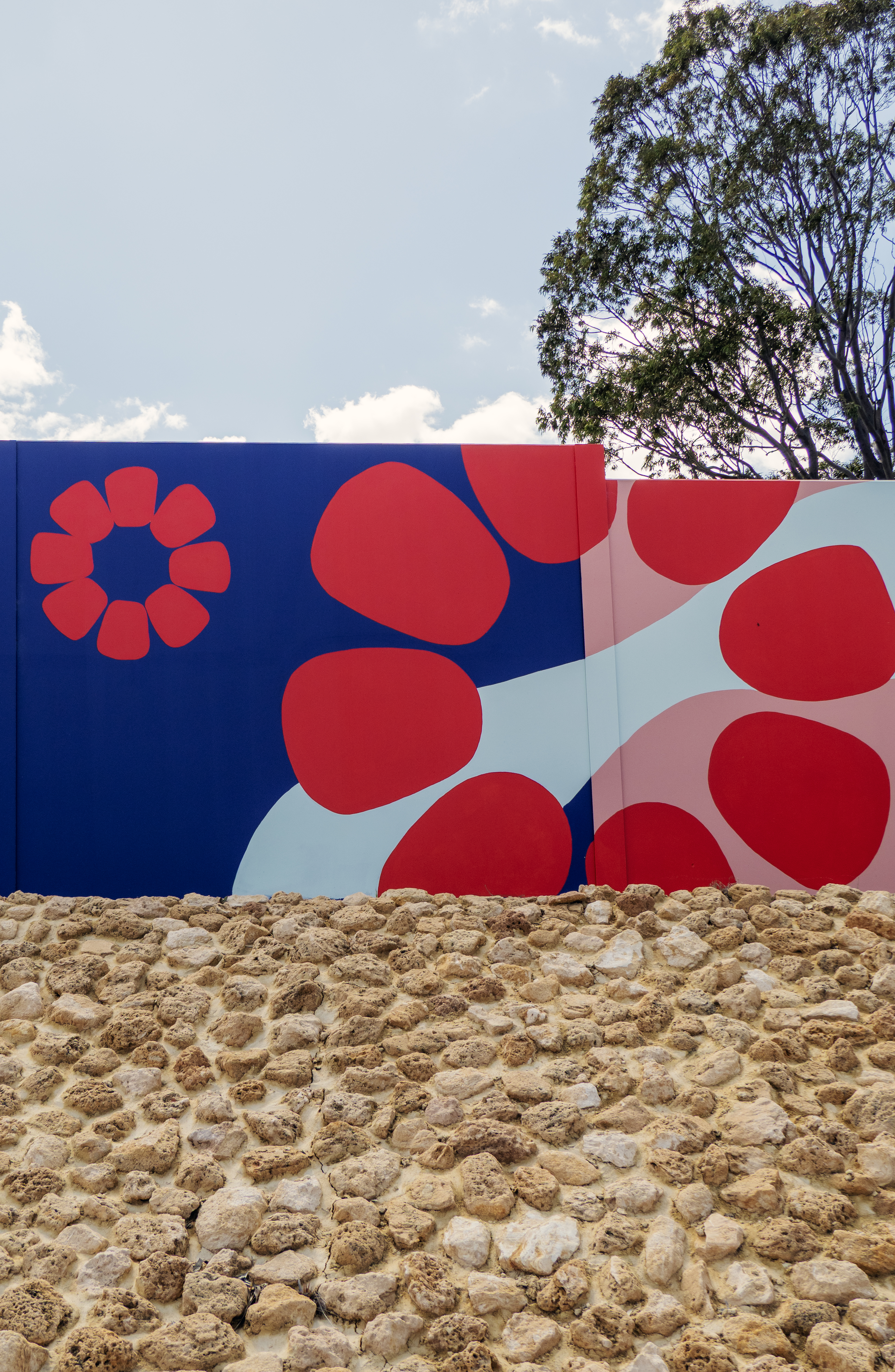
The scarlet hue of the Zamia palm is a striking feature of the mural. The plant would grow over summer and by March, the seeds would be collected, the nuts would be pulped into a type of pancake and cooked on a rock next to the fire. The nut also had a poison in it. Before it could be eaten it would need to be soaked in water for a week. The poison was also used to stun fish into traps in local waters.
The shield lines then flow toward the end of the mural with sleek diagonal lines representing the leaf of the Zamia.
See below the journey in one image to guide the selection of images on the page
Symbols
Read below to learn more about what each symbol means.
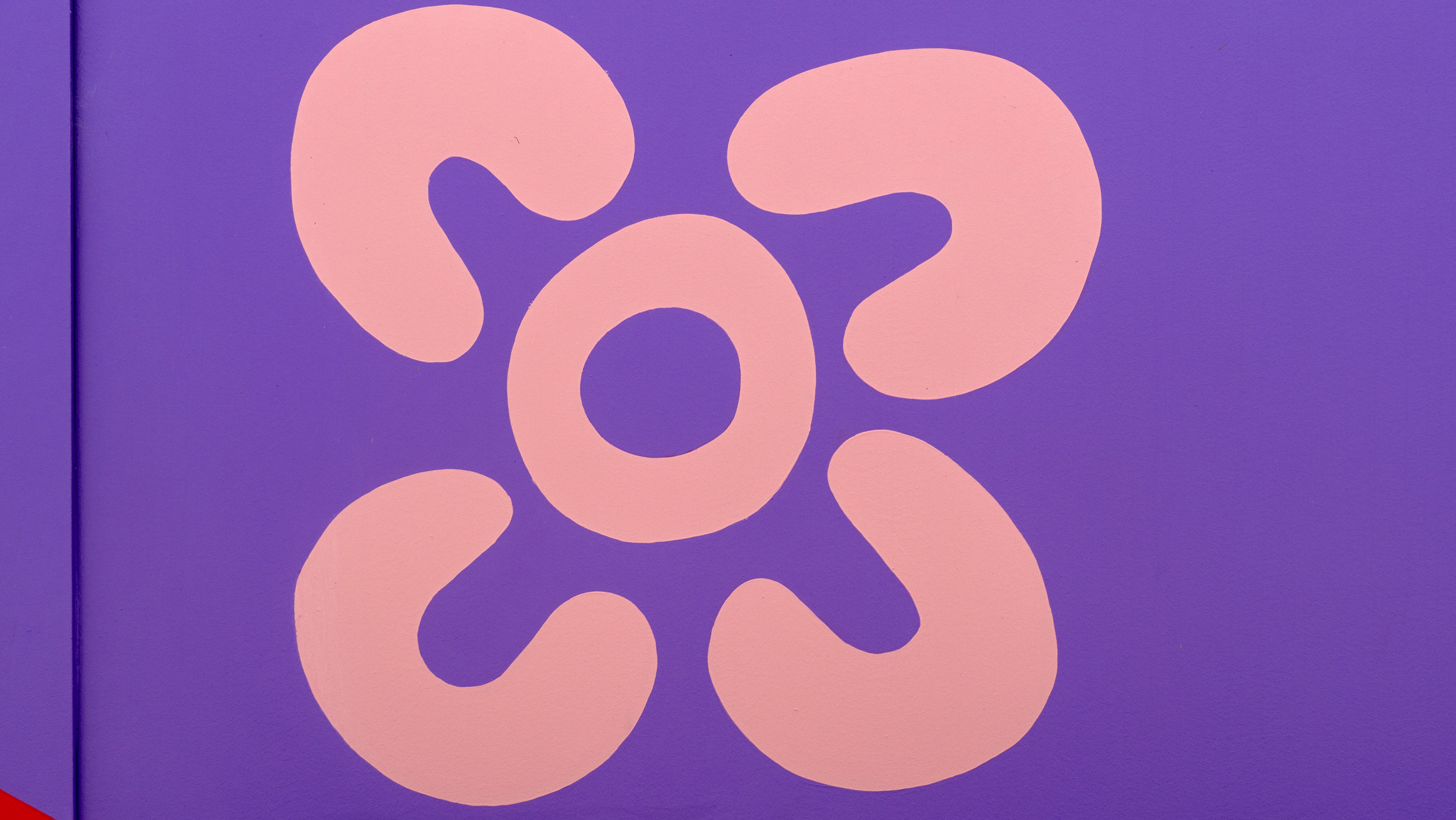
Meeting Place
Meeting places, community »